June 20th, 2011

Today is all about the app.
You know, applications that make your life easier and/or more enjoyable.
Believe it or not, but there are a variety of really useful guitar apps available for download. Some are free, others cost a few bucks, but none of them will set you back very far.
Check out 10 amazing guitar apps below…
Fretsurfer Guitar Trainer
This basic app helps users master the fretboard though two game setups. In the first, note and string information are employed to find the corresponding fret. Meanwhile, the second fret information is used to find the correct note. Fretsurfer Guitar Trainer also features a really useful statistical database including your fretboard strengths AND weaknesses. $2.99
GUITARTOOLKIT
GUITARTOOLKIT provides a chromatic tuner, a chord library with over half a million chords, a scale reference guide as well as a metronome with tap-tempo pad. Also play bass? Banjo? The app accommodates everything from six and 12 string guitars and even makes a subtle transition for lefty guitarists. $9.99
Guitar Jam Tricks
Guitar Jam Tricks features an hour’s worth of professionally recorded backing tracks in a particular style with five versions currently available: Acoustic Blues, Humbucker Blues (guitar and bass) and Reggae (guitar and bass). The app is easy to use. Simply pick a key, select a major or minor progression and solo away. $1.99
Guitarist’s Reference
The app provides a chord and scale primer with an incredible 3,000+ chord encyclopedia and information on more than 40 scale types. If you need a resource for practically any chord and scale available the Guitarist’s Reference is definitely for you. $4.99
Guitar Tools
Guitar Tools packages together several of Planet Waves’ popular offerings, including Chordmaster and Scale Wizard. The app also boosts a tuner and metronome as well as access to instructors in your area and music store locator. $8.99
iSHRED
iSHRED is a virtual guitar that lets you import high-quality guitar samples through eight effect units — including fuzz, treble boost, wah and distortion. iSHRED also features an overdriven amp simulator. Record your jams and share them via AirPlay. $4.99
Lick of the Day
Lick of the Day is one of the best apps available as Zakk Wylde, Joe Satriani and Gus G all endorse the product. Not only that, but the guitarists also provide expert advice via the lessons. Lick of the Day is intended for the advanced guitarist looking to master challenging guitar licks. Lick of the Day is available upon subscription.
PocketGuitar
PocketGuitar is one of the easiest virtual guitar apps available. Simply press your fingers on the “strings,” strum your hand across the screen and the notes ring out. $0.99
TabToolKit
TabToolKit displays standard and tab notation with a virtual fretboard. A built-in audio synthesis engine enables users to hear and control audio for all instrument tracks individually as well as speed up and slow down the tempo. TabToolKit is one of the most interactive guitar tab apps on the market. $9.99
Ultimate Guitar Tabs
Designed from the creators of Ultimate-Guitar.com, the app features 300,000 tabs also found on the website. It’s easily the largest guitar tab library available. Access your favorites by either artist or song title; narrow your search by type (guitar, bass, drum, chords), part of the song (intro, solo, chorus), diffculty level, tuning and rating. $2.99
Posted in Guitar | No Comments »
June 13th, 2011

Ever heard the term chicken picking? Hybrid picking?
The concept may sound goofy (or even complicated) but chicken picking (aka hybrid picking) is a lead guitar picking technique used often in country music. The technique, also found in rock and metal, is accomplished by plucking the strings outward, or, away from the fretboard instead of parallel to the fretboard with the fingers of the right hand. Consequently, the note is immediately dampened by increasing the pressure of the left hand’s finger on the fret.
The reason guitarists utilize chicken picking is because the style provides a very specific sound that often goes great with country music. Hybrid picking also serves a valuable purpose as you will find with the picking technique certain notes are actually easier to reach with your right, and not left hand.
To hear a 45 second guitar solo with chicken picking CLICK HERE!
Chicken picking will take some time to master so don’t get frustrated if the style is not immediately picked up. When you play country guitar, most individuals prefer to use a clean, telecaster sound with very few — if any effects. Some guitarists might introduce a little reverb, compression or delay but country is a very organic genre and does not require a lot of digital effects.
Country music does, however, have some specific styles that make the genre distinctive and hybrid picking is a fantastic way to get the quick popping sound that you have probably heard a hundred times yet may not recognize immediately as chicken picking.
Since it can be a little difficult to achieve the quick, popping percussive sound of hybrid picking some guitarists recommend using a thumb pick. The thumb pick is important because it frees the right index finger to play strings and pop them whenever you feel like it. For some reason, the index finger is traditionally the perfect size and weight for hybrid picking.
Country music is NOT dependent on one set of scales, like rock or blues. Instead, a good country guitarist understands how to play over the chords much like bluegrass or jazz. Every chord has different lines, chord shapes or riffs associated with it. The more experienced the country guitarist, the more tricks he or she has for a chord.
Beginners need to master a few basic chords like C, D, E, G and A.
Another thing you should understand about country is that the genre uses a great deal of first position playing, based on chord shapes like bluegrass. This means the riffs played revolve around the chord shape, not just the notes in the chord but others around the chord.
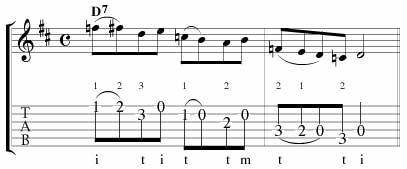
For a good example, find out to play a lick based on a D7 chord thanks to FreeGuitarVideos.com…
Want to learn more about the country guitar? Check out CountryGuitarChops.com.
Posted in Country, Genre, Guitar | No Comments »
June 6th, 2011

Ever heard the saying “a moment of pleasure lasts a lifetime of pain”?
Okay, it may not be the most appropriate slogan for beginner mistakes on guitar, but with just enough practice of poor habits and you guessed it…they’ll last a lifetime. Unless, of course, you learn the guitar the right way in the first place.
If you played sports growing up you probably remember your coach stressing — fundamentals, fundamentals, fundamentals. Chances are you hated this term after awhile because it usually represented something that was boring, mundane and completely unnecessary. Consequently, you probably asked the question what’s the point of fundamentals?
Similar to sports, the best guitarists began with fundamentals and then eventually progressed to more complicated skills. You can’t dunk before you shoot and you can’t master the guitar before you learn the basics. Avoid the common beginner mistakes (below) and your possibility of playing with bad habits for a lifetime will cease to disappear.
I’m a Master Guitarist from Day One
Mastering the guitar will take a lot of time.
If the above statement is not obvious then perhaps you should reassess your goals. Regardless of your age, learning the guitar takes time. Some are a little quicker learners, but you need at least six months to a year to even begin to realize the potential of the guitar.
Stick with it, start small, start simple.
I’m too Impatient to Learn Guitar
Impatience has an awful lot to do with why some expect to master guitar from day one. Unfortunately, as technology becomes more sophisticated and quicker, humans are losing the virtue of patience. The guitar, however, has not progressed at the same rate and learning the instrument is much like it was ten, twenty and even a hundred years prior. Today, more information and guitar resources exist but the method for learning guitar is pretty much the exact same.
If you have the patience, exercise it fully. If not, you better learn to get some. Of course, having a natural desire to play guitar always helps as we naturally have a tendency to stick with a subject that we’re passionate about to begin with.
One Chord at a Time
If you just started learning guitar you have probably already heard about how important chords are to mastering the guitar.
Unfortunately, a lot of beginners only want to master one chord before moving on to the next. Big mistake. It’s important to learn (and master) the major chords, but not practice them one by one. Instead, learn three to four different chords and experiment shifting between chords with a metronome. At first, this will be very frustrating but over time you will master fingerings much faster and strengthen fingers. The result is a better guitarist.
Forget the Pinky
Throughout the day, regardless of the activity, how often do you use your thumb? Index finger? Pinky?
We have ten fingers, five pairs of each, and humans almost always neglect the power of our pinkies until we understand how important they are to the hand. Pinkies are not only helpful with day-to-day chores but also playing the guitar.
Naturally, when you first start playing almost all guitarists will find that fretting with the index and middle finger are easiest while the ring and pinky finger lack the same strength. In order to solve this dilemma practicing every day will slowly built up finger strength on all four fingers of the left hand (assuming you’re right handed).
However, you can take things a step further by focusing on one simple practice technique. Whenever you play, your fingers should be hovering over the strings of your guitar ALL OF THE TIME. Therefore, when you form a D chord your pinky finger should be hovering somewhere over the high E string or B and likewise for all other chords.
Music Theory, Who needs it?
Music theory is a lot like fundamentals. Boring at first, but completely vital to fully learning (and understanding) the guitar.
Aside from the basics of What is a Scale? What are major and minor chords? What is rhythm? Harmony? — Beginners can also learn a lot by understanding the root note of a chord. The root note is the bass note. It determines which string you should start strumming or picking from and is important for not only learning chords but understanding the relationship between you and the bassist.
Posted in Guitar, Videos | No Comments »
May 31st, 2011

Jazz is one of the most important and influential genres of music that was EVER created. From its origins in the beginning of the 20th century to present day, jazz music has not only made an impact as a genre but also influenced American popular music.
Therefore, jazz’s West African pedigree is evident today with its blue notes, improvisation, polyrhythms, syncopation and the swung note. Guitarists who desire to learn jazz guitar will ultimately learn about several subgenres of jazz music:
- 1910s — New Orleans Dixieland
- 1930s and 1940s — Big Band Swing
- mid-1940s — Bebop
- 1950s and 1960s — Free Jazz
- 1970s — Jazz Fusion
- 1980s — Acid Jazz (include Funk & Hip-Hop)
- 1990s — Nujazz
Think about it. What other genre of music do you know that has been around since the 20th century in America, spread around the world and its aesthetics adapted to varied environments and many different distinctive styles?
If you want to be a great guitarist it’s only natural that you want to master jazz guitar. What do you need to know?
Guitar Scales

The Modes
What are modes? How do you play them on guitar? What do they have to do with improvisation?
The Bebop Scale
The bebop scale, a technique first used by Charlie Parker and other pioneer bebop musicians, is at the foundation of jazz music. Learn the Bebop scale and you’ve made the first step toward mastering jazz guitar.
The Lydian Dominant Scale
Tritone substitution is a common substitution for dominant chords. The lydian dominant scale is the scale you can use to improvise over such chords.
The Pentatonic Scale for Jazz Guitar
The pentatonic scale (or blues scale) is usually the first scale you learn on the guitar. Learning about how groundbreaking the pentatonic scale is not only important for mastering jazz guitar but music in general.
Pentatonic scales are often used to do a guitar solo in blues, rock and pop music, but they are also very useful in jazz.
The Altered Scale
The altered scale is used to improvise over dominant chords with altered extensions.
Chromatics
Ready for that “jazz sound”? Chromatics allow you to put some jazz into your guitar scales
Minor Blues Guitar Scales
There is always a major scale and a minor scale. Look into some of the more important minor blues guitar scales to understand the basic concepts of jazz.
Exotic Guitar Scales
What are exotic guitar scales? If you really want a challenge look into Arabian, Japanese, Oriental, Jewish, Indian, Gypsy and other exotic guitar scales.
Dissononance, Note Enclosure & Resolution
What is dissononance? Resolution? Note enclosure? Find out how these musical elements will allow you to master jazz guitar, particular solos.
Guitar Arpeggios & Jazz Patterns

Arpeggios
What exactly is an arpeggio? Furthermore, how would you classify a jazz guitar arpeggio? Understanding arpeggios and how they directly relate to jazz guitar is essential to the experience.
Jazz Guitar Patterns
Patterns are small melodic or rhythmic building blocks for your guitar solos and phrases.
Triads Over Minor Chords
Create interesting melodic phrases on minor chords by alternating triads. The result is a more diversified sound.
Jazz Style
As previously mentioned, there are several different styles of jazz. Do you want to master Latin guitar? Bebop? Master jazz guitar in general. A few of the vital subgenres of jazz:
- Bebop
- Gypsy Jazz Guitar
- Jazz Blues Guitar
- Latin Guitar
Guitar Technique & Practice Essentials
If you really want to master jazz guitar it’s going to take some time. Thankfully, a ton of phenomenal resources exist on the Web. Of course, you can always check out one of our top rated guitar courses to really learn jazz guitar HERE!
Stay disciplined with great practice techniques (warm-up exercises, finger stretching exercises, timing drills) and you’re well on your way to learning jazz guitar. If you love jazz music then you have the necessary interest to stay the course and one day learn to play your favorite songs!
Posted in Guitar, Jazz, Scales, Videos | No Comments »
May 23rd, 2011

If you are really serious about learning the guitar then you need to know that playing the instrument is much more than looking up guitar tabs on the Internet. Thus, it’s vital that beginner guitarists begin with the sheer basics of the instrument.
Learning chords and scales may sound boring, but it’s absolutely fundamental to mastering the guitar. Why? When you first start playing the instrument you may feel like you’re blind, mindlessly wandering around the neck fretting random places without any clue as to why. However, with a solid understanding of guitar scales and guitar chords, you can immediately understand not only what you’re doing but why.
If your goal, as the next great guitarist, is to learn to play and create music then you MUST learn about scales and chords.
…But what comes first?
Before we get too far, let’s examine each term.
Chord - a group of (typically three or more) notes sounded together, as a basis of harmony.
Scale - in music, a scale is a group of musical notes collected in ascending and descending order, that provides material for or is used to conveniently represent part or all of a musical work including melody and/or harmony.
In the event that you did not already notice from the definitions (above), chords and scales are essential to the harmony of creating and playing music. They allow us to easily organize individual notes into a formula that actually makes sense.
How many guitar chords exist?
It may sound like a logical question, but asking how many guitar chords exist is an awful lot like asking how many colors can be found in a rainbow. Theoretically, the color wheel has three primary colors, but with those primary colors an artist is basically able to create an infinite amount of variations.
Such is the case with guitar chords.
Consider this: There are 12 notes in an octave, most guitars have either three or four octaves, thus with standard tuning (or even non-standard tuning) there is anywhere between 40,000 and 450,000,000 chord possibilities.
Thankfully, you do not need to memorize every single chord available. In fact, if you can learn the standard barre chords and the Major/Minor/7th/Minor 7th/Major 7th — you will be well informed. The basics break down like this:
- 12 major chords
- 12 minor chords
- 12 7th chords
- 12 Minor 7th chords
- 12 Major 7th chords
Pretty easy, right? Considering that if you can master the 60 chords above you should be well on your way to learning the guitar since most songs only require three to four chords.
Okay, so how do guitar scales come into the equation?
Just like guitar chords, there are several different scales available for the guitarist’s arsenal and just like guitar chords, you do not have to know every single scale to be a professional guitarist.
Rather, scales are an extremely useful tool for not only understanding how the guitar works but what makes good music. Again, in music, a scale is a group of musical notes collected in ascending and descending order, that provides material for or is used to conveniently represent part or all of a musical work including melody and/or harmony.
A lot of aspiring musicians are really put off by scales because A) they falsely believe learning scales limits their creativity or B) are only necessarily if you want to be good at solos.
Actually, those two misconceptions could not be further from the truth. Learning scales is extremely useful because if you only limit yourself to playing standard chords you will never break out of the ordinary. You MUST connect your chords with scales. If you need a literal example, most would agree that no one was better at mixing chords with scales than Jimi Hendrix.
Learning scales will only enhance your understanding of music theory, therefore making you a stronger musician. Scales are there to support your melodies, arrangements, harmonies, but by no means a substitution for inspiration.
Simply put, lack of understanding of scales will foolishly force to erratically wander around the fretboard for years until you unconsciously learn to find the strong notes. However, with scales you can discover the “strong notes” in weeks or months.
What should I learn first — Chords or Scales?
The traditional response is scales first, chords second. However, some innovative guitar teachers are actually preaching the exact opposite. The theory for the later is that scales actually complement chords. Because the scale is defined by its root note, the chords are hidden inside the scale and by learning chords first you will in turn know more about the scale.
Truthfully, learning chords or scales first might come down to personal preference (if you’re self-taught) or the decision of your private instructor. The order is important, but not nearly important as making sure that you learn both scales and chords efficiently. They both matter, so take the time to learn them!
Posted in Chords, Guitar, Scales | 1 Comment »
May 14th, 2011

When you first pick up a guitar (especially if you bought one of those “starter/beginner packs”) it’s really easy to take the guitar out of the box, hook-up the amp and start playing.
However, somewhere between that point in time and the day when you become comfortable playing the guitar (likely a few months down the road) a lot of guitarists generally miss out on something that is fundamental to not only the guitar but music. What is it? An understanding of musical theory, philosophies and most importantly terms.
If you have played guitar for months or years you likely understand a lot of the terms below without actually knowing their name. However, it’s important to get the language down to truly consider yourself a musician.
Thankfully, we have put together a collection of commonly used, yet often confusing words that relate to music. Do your homework and your understanding of music will increase just that much more.
Chord: two or more notes played simultaneously.
Chord Tone: selected notes of a chord (i.e. G, B and D are all chord tones of a G major chord).
Fifth: an interval composed of seven half steps. The interval between the 1st and 5th step of the major scale is a fifth, or perfect fifth.
Flat: the musical symbol that indicates to lower the pitch of a note by one half step (reference half step).
Half Step: distance of one fret on fret board.
Interval: the distance between two pitches.
Key: tonal center or main pitch to which all others in a composition are related.
Major 3rd: an interval composed of four half steps (or four frets). The interval between the 1st and 3rd step of the major scale is a major third.
Major Chord: a chord consisting of root, major 3rd and perfect 5th.
Major Scale: the seven note scale to which all Western (American and European) music is compared. The major scale is: whole step, whole step, half step, whole step, whole step, whole step, half step OR symbolized by the “do, re, mi, fa, so, la, ti, do” saying. The G minor notes in order are G, A, B, C, D, E, F.
Minor Chord: a chord consisting of root, minor 3rd and perfect 5th.
Minor Scale: seven note scale with the following intervallic formula: whole step, half step, whole step, whole step, half step, whole step, and whole step.
Minor Scale (Pentatonic): five note scale derived from the natural minor scale. The Pentatonic scale leaves out the 2nd and 6th steps of the natural minor scale, creating the following intervallic formula: minor 3rd, whole step, whole step, minor 3rd, whole step.
Minor 3rd: an interval composed of three half steps (or three frets).
Mute: to muffle or lightly muffle desired strings. Can be achieved by lightly touching the strings with the fingers of the fretting hand or with the heel of the picking hand.
Octave: an interval composed of 12 half steps.
Open string: when a string is played but not fretted.
Root: the lowest note of a chord in the fundamental position (i.e. G is the root of a G chord).
Scale: a series of tones that follow an intervallic formula within one octave.
Sharp: the musical symbol that indicates to raise the pitch of a note one half step.
Tonic: the key note of a scale (i.e. A is the tonic of the A minor pentatonic scale).
Vibrato: the sound achieved by wavering the pitch of a specific note.
Whole Step: distance of two half steps (or two frets).
—
Want more music theory? Visit 8notes.com or ZebraKeys.com. They are both phenomenal references for beginner music theory.
Posted in Guitar, Scales | No Comments »
May 7th, 2011

Unless you’re playing an acoustic show alone, the beautiful thing about live music is that it almost always consists of multiple people playing multiple instruments.
Consequently, it’s easy for those new to music to get confused about who is playing electric guitar and who is playing electric bass. Both instruments, especially from a distance, look very similar. They’re both string instruments, are composed of a body, neck and head and are played just about the same.
Let’s start with the basics:
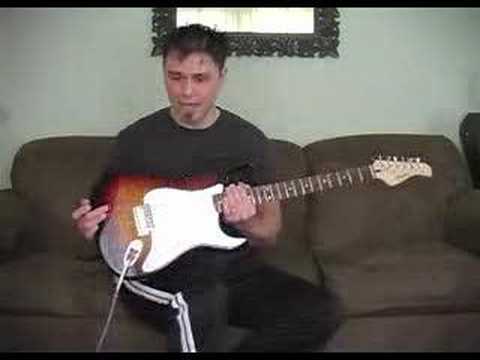
Electric Guitar: A stringed instrument usually having six strings (non-standard 7-string and 12-string guitars also exist) with a sound that is amplified by electrical means.
Bass Guitar: A stringed instrument usually having four strings (non-standard 5-string and 6-string basses also exist) with a sound that is amplified by electrical means.
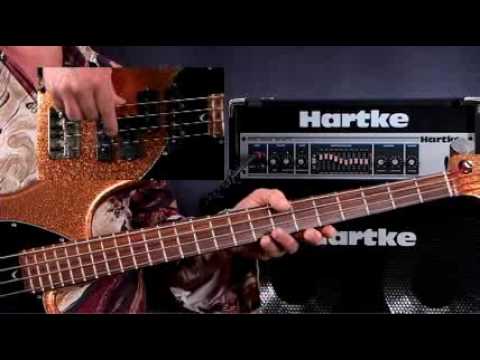
As a result, the very first physical difference you should notice between an electric guitar and the bass is the number of the strings. Additionally, strings of a bass are generally quite thicker.
Now, let’s examine the notes of each instrument…
Guitar (thinnest string to thickest)
1st string – E
2nd string – B
3rd string – G
4th string – D
5th string – A
6th string – E
Bass (thinnest string to thickest)
1st string – G
2nd string – D
3rd string – A
4th string – E
Did you notice that the last four strings of a guitar are the exact same as the four standard bass strings? That makes the bass practically the guitar minus two guitar strings, right?
Wrong.
The first string on a 6-string bass is actually equivalent to the sixth string of a guitar. Furthermore, if the guitar had a seventh string it would not be thinner, but actually thicker. Essentially, the missing seventh string would have the same exact pitch as the second string on a 6-string bass.
The contrast in the two stringed instruments is exactly what makes them so special when combined together. You may or may not not know that the guitar is generally used for two purposes — either to serve as lead guitar or rhythm guitar. Sometimes, a band has multiple guitarists with one serving as the lead and one or/more serving as the rhythm guitar(s).
The bass guitar traditionally works more with the rhythm guitar compared to the lead guitar, because the primary purpose of the bass is to aide the drums (and percussion) in the rhythm of the song. There are, of course, differences as certain bands (i.e. Primus) are actually regarded for their bass and often it almost takes the role of the lead in the song.
Thus, the bass guitar exists to:
- Provide the rhythmic foundation.
- Provide the harmonic foundation.
The bass guitar and drums work well together because they are usually designed to play a supportive role to create the pulse of the music (as well as set the song’s foundation). When is the last time you found yourself tapping your foot to a beat unintentionally? That is your instinct to vibe to the pulse, or beat of the music. Bass and/or drums create the pulse.
The Major Difference
Simply, the major difference between the guitar and bass guitar is the pitch range of the instruments. The bass guitar plays notes an octave lower than a regular guitar.
Music is an art and thus there are no rules. You will find that the bass guitar traditionally plays a supportive role in the band while the guitar (with it’s higher range) is more in the spotlight. However, some bands make the guitar more of a supportive instrument. Others, do not even have a guitar at all. Regardless, the two instruments are usually very critical and at the foundation of rock ‘n roll music.
If you are a guitarist, you can learn an awful lot from watching bass guitar lessons and conversing with bass players. The same is true with bassists.
Posted in Guitar, Videos | No Comments »
April 30th, 2011

To close out the month, GLC figured it would be a good time to surf the Web and highlight some of the exciting things fellow guitar sites are doing at the moment.
The World Wide Web is a wonderful place to go for information and when it comes to learning the guitar, you can discover so much these days.
Theta Music introduces new ear training games
GLC has reviewed Theta Music in the past and we cannot say enough about their innovative way at looking at music theory. Most people associate music theory with intense boredom, which makes it extremely difficult for beginners to learn.
What Theta has been able to accomplish with their learning games is a way to make understanding music theory actually fun. Imagine such a thing!
If you have checked out Theta in the past, now is a great time to revisit the site as they just launched a few new games, including a brand new version of its acclaimed online ear training system Theta Music Trainer.
The new version features a Personal Trainer component, which recommends specific games and practice levels for each student, based on current skill level and previous game play. In addition to the upgraded personal ear trainer, Theta does a phenomenal job of offering personalized feedback and recommendations.
If you need to brush up on your music theory you should definitely give them a peep (or should we say an ear?).
New lessons on JamPlay, Guitar Tricks and Jamorama
Part of the reason JamPlay, Guitar Tricks and Jamorama are some of the highest rated guitar courses on GLC is because they’re not so much about old-fashion techniques for self-taught guitar like reading books (because how many people still honestly learn that way?) but more about utilizing the World Wide Web.
Sites like JamPlay offer a massive online database of video lessons and articles and most importantly the database is updated quite regularly. You should check them out if you’re looking for a new way to learn the guitar without breaking the bank. Memberships are actually quite reasonable.
Subscribe to Guitar World (or another guitar niche publication)
Guitar World is one of the best publications 100% dedicated to guitars. There are some other great guitar magazines available, but what we really like about Guitar World is along with the subscription the publication also has a ton of great unique content for the Web.
In fact, at GuitarWorld.com you can learn about various artists, browse their database of lessons, invest in a new DVD, check out gear and more. Honestly, who does not get inspired when they read about some of the best individual’s ever to pick up a guitar? Subscribing to a guitar magazine and surfing websites are a fantastic way to stay motivated with your own guitar playing.
Plug-in to Social Networking
Do you use Facebook or Twitter on a daily basis? If so, why not check out what the guitar world is doing on these popular social networking sites?
A single search of guitar groups or fanpages on Facebook will yield hundreds of thousands of results. This is a great place to get connected with other enthusiasts in the event that you may not know a ton of musicians locally.
Also, if you enjoy staying up-to-date with your favorite guitarists, most bands are now on Facebook and Twitter and update their pages quite frequently.
Last but not least, Digg.com is not as common of a social networking site, yet a terrific database for learning about what’s going on in the music world as articles that are “Dugg” the most are very popular and hence terrific resources for learning more about the guitar.
Posted in Guitar | No Comments »
April 20th, 2011
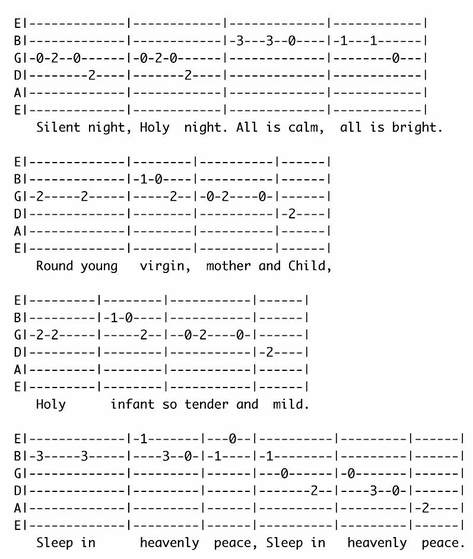
Guitar tabs have substantially progressed the learning curve that one needs to understand and learn to play their favorite popular tunes. Although most will associate the popularity (and thus its origins) of guitar tabs with the boom of the Internet, music tablature actually dates back as far as the Renaissance.
Tabs are a fantastic way of deciphering musical notation without needing the ability to read sheet music, because it can take a popular song, like Led Zeppelin’s “Stairway to Heaven”, and inform the guitarist on what strings they need to strum and where they need to fret. As a result of the simplified “sheet music”, guitar tabs are the easiest way to learn a new song.
Unfortunately, guitar tabs are user-submitted and thus the accuracy of each tab should be questioned. Frankly, there are a lot of poorly composed guitar tabs that are not even remotely accurate. Therefore, by paying special attention to the site (best websites for guitar tabs listed below) as well as rating of each tab will clue you in as to the legitimacy of the guitar tab.
Ultimate-Guitar.com
Ultimate-Guitar.com prides itself on being the “#1 source for guitar tabs, bass tabs chords and guitar pro tabs”. With over 300,000 guitar tabs and counting, Ultimate Guitar is one of your best (and biggest) resources for useful guitar tablature.
It’s a pretty easy website for searching and finding the particular song or artist you need. In addition to the guitar tab database, Ultimate-Guitar is also a terrific site for all things music as they post a lot of great articles and interviews. They even have a few useful guitar lessons.
A basic search of even a remote band like Primus will bring up 420+ results so it’s easy with the several different “versions” of each song to get overwhelmed. Consequently, it is important to pay special attention to the guitar tab’s rating and number of comments. Readers can rate the accuracy of the guitar tab as well as comment with revisions, so this is your best option for quickly finding out the accuracy of the tab.
Songsterr.com
Songsterr does a really nice job of organizing their guitar tabs as you’ll immediately find their database sorted by difficulty level on the homepage. For example, Pink Floyd’s “Comfortably Numb” might be a brilliant song, but it’s also extremely difficult to learn on the guitar. Thanks to Songsterr, you’ll quickly notice that the tab is classified under “Advance” while equally great jams like Linkin Park’s “Numb” and Bob Marley’s “Redemption Song” fall under “Beginner” and are much more suited for beginner guitarists.
Users can also sort guitar tabs by the genre and even decade of release. Upon reaching a specific guitar tab, you will notice that like Ultimate Guitar, you not only have the ability to listen to the actual song, but also change up the mix (i.e. eliminate vocals), speed and more. Unfortunately, not all of these features are available for free so check out their rate plans if interested.
Like a lot of the top rated guitar tab websites, Songsterr is also available on the iPhone so it’s really great for mobile users.
Guitar World Tabs
Similar to Ultimate-Guitar, Guitar World Tabs has a lot of amazing feature stories and interviews on the website. They’re not just a guitar tab resource. The site is very well designed with a plethora of information and if you’re still not satisfied, Guitar World even puts out their own monthly newsletter that you can sign up to receive for free!
The search function on the site is really easy to use as visitors can sort for basic things (guitar vs. bass), and even view the top-rated, most viewed and/or recently added guitar tabs with a click of the mouse.
What’s really innovative about the specific guitar tab page is that the screen will auto-scroll (at a very slow pace) so you do not have to pause every few seconds, take your hands off the guitar and manually scroll down to read the next part of the verse or chorus.
—
You should be able to find just about any guitar tab on one of the websites listed above. We should note, however, that even though we consider Ultimate-Guitar, Songsterr and Guitar World Tabs the three best resources for guitar tabs even the top sites have a lot of poorly composed tabs. By paying special attention to the tablature’s rating, comments, author history (does he or she post a lot? good overall rating?), comparing to other tabs (same song) you will vastly enhance your chance of learning from a legitimate guitar tab.
Posted in Courses, Guitar | No Comments »
April 15th, 2011

If you have ever picked up a guitar you are likely very familiar with the name Van Halen, yet may not recognize the term “guitar tapping”. Why the comparison?
Well, if you love Van Halen music you are actually more familiar with the guitar tapping technique than you might think. In fact, if it was not for the late-1970s and Eddie Van Halen the guitar world may not be quite the same today.
Van Halen is a master with fretwork and when he does pass away, the guitar solo for “Eruption” might arguably go down as his greatest contribution to rock music. The solo is worth noting here because it serves as the original groundwork for the guitar tapping technique. If you understand how that solo is pieced together then you will also understand why you can really do some unique things with guitar tapping and how it works.
First, we should let you know that the term “tapping” is definitely misleading. It’s a generic term for fretting notes with your right hand (or picking hand)* and not, like you often hear with some of the best bass players in the world, an advance technique where you actually slap the instrument.
What the guitarist is really doing is using the picking hand and its fingers to “tap” on a note with advance techniques like hammer-ons and pull-offs. You’ve probably heard of basic hammer-ons and pull-offs (if not, introduction below) but now you’re just doing them with your alternate hand.
Hammer-Ons
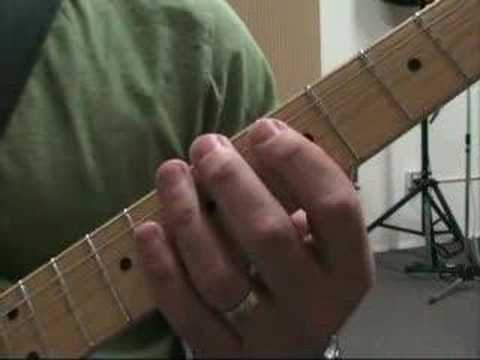
Hammer-ons (like pull-offs) is simply an alternative way of playing a note without re-picking to play another note on a higher part of the same string. It’s basically the old analogy of “kill two birds with one stone”.
TRY THIS: First, fret the second fret on the third string with your first finger. Next, position your third finger just above the fourth fret on the third string but make sure it’s not quite touching.
Pick the string, then, without picking, place the third finger firmly on the fourth fret. If you do this with enough force the note on the fourth fret should sound. Pretty cool, right?
Like anything, this will take a few days to get down so practice, practice, practice!
Pull-Offs
Pull-offs are pretty much the complete opposite of hammer-ons. You can do pull-offs by either A) Angling your hand parallel with the neck and pulling off in a downward motion or B) Angling your hand perpendicular to the neck as if playing the piano and pulling-off in an upward motion.
First, put your third and first finger on the third string. Fret the first note with your third finger and second note with first. Play the string with a pick and then remove your third finger while performing a subtle downward tug with the same finger. Listen carefully! Did you hear the note the first finger is fretting “ring out”? If so, great.
Again, practice until you can play pull-offs without the ring stopping after you remove your finger.
Time to Experiment…
By now you should have noticed that with a little practice the number of variations with hammer-ons and pull-offs are virtually endless. Best of all, change it up with the picking hand and the possibilities become even more diverse!
As a result, you can do a ton of experimentation and I don’t know about you, but nothing is better than experimenting with your guitar. As always, understanding scales (which serve as the basis for all music knowledge) is a great place to start with multiple hammer-ons, pull-offs, etc.
*-left hand if you’re left handed
Posted in Genre, Guitar, Learn Guitar Online, Rock, Videos | No Comments »
|