Archive for the ‘Learn Guitar Online’ Category
Monday, July 23rd, 2012
If you have noticed, most covers and renditions of songs are done with the use of the acoustic guitar. This is because the guitar is one of the easiest instruments to play and can be used in diverse ways in different genres of music. Such is the image of this guitar that musicians use it to build their image and even the personality of their songs. If you want to learn to play guitar, starting with beginner acoustic guitar lessons is one good step for you.
The first thing you have to know before starting acoustic guitar lessons for beginners is to find out your comfort in holding an acoustic guitar, this would depend a lot on the factor if you are right handed or left handed. Most right handed guitarists strum and pluck with the right hand and tap the frets on the fretboard with the left hand. The strings gradually decrease in size – the thickest string is on top and the thinnest on the bottom. With this set-up of the acoustic guitar, you would know if the guitarist is right-handed or left-handed.
Strumming and plucking are the two most commonly used techniques to play the acoustic guitar. Strumming is the flexing of fingers or the use of a pick on the strings of the guitar in an upward and downward patterned motion. Plucking on the other hand is the abrupt pulling and releasing of a string on your finger. A pick can also be used for plucking. Each note that is played depends on tapping notes on your fret board. Use only your fingertips when tapping notes on your fret board. Too much can mute or muffle the sound that comes out when you strum your guitar. Beginners, do not worry too much about the calluses that you might get on your fingertips.
The next thing that you have to learn is the proper tapping of tabs. Guitar tabs are available in books, music magazines and on online acoustic guitar lessons. Tabs are greatly suggested for beginners, tabs are easier to read because they already appear as a diagram to where your fingers should be located on the fret board. You can actually take free or paid tutorials and acoustic guitar lessons online to further practice your skills on your acoustic guitar.
These are just the basic steps to follow if you want to learn how to play the acoustic guitar. Do not limit yourself on what you see in the books or on online tutorials, you must explore on your own. Practice, and enjoy what you are doing. Remember that learning to play the acoustic guitar takes time, practice and patience.
Tags: acoustic guitar lessons for beginners, acoustic guitar lessons online, beginner acoustic guitar lessons, holding an acoustic guitar, online acoustic guitar lessons
Posted in Learn Guitar Online | No Comments »
Monday, July 23rd, 2012
Deciding to play the guitar isn’t as easy as deciding on what to eat for breakfast. At this point, you probably have the highest enthusiasm anyone could ever have since you are a beginner. Beginner guitar lessons can be a lot of fun and excitement as you slowly learn the tricks. One thing you must consider while deciding taking guitar lessons beginners is the budget. There are numerous types of beginner guitar lessons available, while some you can get free and others can drill a hole in your pocket. Read on to know more:
Options For Guitar Lessons For Beginners
Option # 1: Online Guitar Lessons For Beginners
You can learn just about anything from the internet nowadays. The same is true with guitar lessons online for beginners. You can opt for this free medium of learning. At least, you won’t need to pay for any initial fees. This way, you can have a first glimpse at what guitar lessons for beginners are like without needing to pay. There are many interactive videos that are available on the world wide web. All you need to do is to patiently learn it step by step and you can also take the assessments as well. The only drawback here is you will need to have your own guitar the first day of your lessons for obvious reasons, but since guitar playing is very popular, there is always someone in your family or neighborhood who has a guitar and you could probably borrow it for a few days. Some companies, like JamPlay, offer you a variety of music forums and lessons via video for a low monthly rate.
Option # 2: Music School
Enrolling yourself in a music school will expose you to limitless learning when it comes to learning the guitar and other musical instruments. You will have your own guitar teacher and you will be scheduled for sessions that last for 45 minutes. You can choose your schedule and how often you want to have lessons in a week. Of course, it is better to have someone teach you so you can ask questions and get answers real time. You do not need your own guitar, because music schools provide materials for learning. You can try different types of guitars such as electric, acoustic, etc. You can also pick a specialty as per your liking. Customarily, music schools hold recitals where you can rock your talent!
Option # 3: DVD’s and Books
This option is the cheapest that you can have. If you have seen other people play and have an idea of how fast or how slow you should strum or pluck the strings, then you can opt for this. Chords are illustrated so that you can understand them easier. Buy books as well with songs that you know, this will help you to relate better. Click here to view the Learn and Master Guitar DVD and book option we have here for you
Choosing the right guitar lesson for beginners is very important, for if you end up starting on the wrong foot, you might lose interest and quit. So research properly and find the best lessons which you are comfortable to learn, it will all be worth it. Good luck on your way to a more musical lifestyle!
Tags: beginner guitar lessons, guitar lesson for beginners, guitar lessons beginners, guitar lessons for beginners, guitar lessons online for beginners, online guitar lessons for beginners
Posted in Learn Guitar Online | No Comments »
Monday, March 5th, 2012
Are you serious about learning guitar? If the answer is yes then you should keep a few things in mind before choosing a guitar lesson, because a wrong start can make you quit learning guitar midway. If you start in the right manner guitar lessons can be fun! Read on to know more about how to choose the best guitar lessons for you.
First you should decide which type of guitar you want to learn, will it be acoustic or electronic guitar. This greatly depends on the type of music you like and want to learn. Do not buy anything which is the most expensive or the cheapest; you might end up regretting afterwards. Be smart and choose something that will help you to improve your skills.
Next, you should decide the source of your guitar lessons like Online lessons, DVD, Classes, etc. You can get best guitar lesson site with the help of a quick search online. Before you finalize any website, ensure that the website has flexible and personalized lessons. They should offer lessons to match your skill level like beginners, intermediate, etc.
Online guitar lessons offer many learning tools which can make your learning experience interesting and fun. There are some awesome forums which can also aid in your guitar. Some of the most happening forums are JamPlay and Guitar Tricks. There is also web based programs, like Jamarama, which offer step by step guitar learning lessons, tutorials, jam tracks, learn to play famous songs/tunes, etc.
You also have the option of DVD lessons; it offers lessons to master guitar. First you need to define why you need the lessons- is it just for some beginner’s training or you want some advance guitar lessons to polish your skills further. Determine the style of guitar playing you intent to learn. After you have decided these search for suitable lessons created by experienced and qualified instructors. Before going ahead and investing in a DVD guitar lesson check for the quality of the DVD. There have been instances where guitar lessons bearing famous instructors are poor in quality.
In my opinion online lessons are better as the DVDs do not offer tools like recording and playback, etc. These tools can be quite handy when it comes to learning guitar. As you can record what you are playing you can later listen to it and identify your weak points. This can help you learn better.
Do not invest on any lessons right away. First do a thorough research on it. Do some online research to find out the reviews and testimonials of actual people who have taken these lessons. Always choose the lessons which are highly rated.
Don’t rush and follow these tips to get the best guitar lessons. Make the best choice and you are sure to enjoy every moment of your guitar lessons!
Tags: best guitar lesson site, best guitar lessons, What Is The Best Guitar Lesson Site
Posted in Learn Guitar Online | No Comments »
Sunday, September 18th, 2011

So you want to learn to play your first song on guitar?
Playing popular songs on guitar is an incredible step in progression because other than creating your own music, learning to play popular songs is the primary reason people learn the guitar. While guitar tabs have made it much easier to learn how to play songs it’s important to not get too far ahead. Any expert will tell you that the only way you can master guitar is by A) learning the fundamentals B) mastering the fundamentals and then C) upgrading to more challenging tasks such as learning to play your favorite song.
While you can learn guitar riffs and chords to popular songs on day one the best advice is to learn the basics and fundamentals before messing around too much with guitar tabs. Got the basics down? Let’s learn how to play your first song.
Grade the Difficulty of the Song
Most people who play the guitar love songs that profile the…you guessed it…guitar. Consequently, you may be a huge Van Halen fan, but do you honestly expect to master “Fire in the Hole” after only two months of quality guitar practice? Hence, your favorite song may be a little difficult to learn immediately on guitar. If this is the case, try to learn a song that is not too challenging with a beginner to moderate difficulty. Thankfully, most top guitar tab sites grade the difficulty of each song.
Break the Song into Segments
If this is your favorite song chances are you have heard it. A lot. Thus, learning to play the song should not be too difficult because your ear already is accustomed to the track. Still, it’s a great idea to break the song into its different segments including the verse, bridge, chorus, solo(s), etc. The verse will likely be easier to learn than the solo yet probably not as simple as the chorus. Break the song into segments and start by learning the easiest parts of your favorite song.
Understand The Guitar Tab (and pick a reliable one!)
Several guitar tabs exist for a single tune. Unfortunately, that does not mean they’re all equal. It will take a little time to find an accurate guitar tab that actually teaches you how to play the song. Fortunately, most guitar tab sites allow users to rate the tab seeding out the incorrect entries. Guitar tablature is a simplified version that is easier to comprehend when compared to sheet music. Guitar tabs simply tell you what string(s) to play and where to fret.
Master the Tempo
Guitar tabs are not great at breaking down the rhythm and tempo of the song. Sheet music is much more reliable. Again, your ear is probably accustomed to the song so developing the rhythm will not be extremely hard, but it will take a little practice. The best advice is to listen to the master recording a few times, paying special attention to each segment. Once your ear is trained it’s time to transfer it to your actual guitar playing.
Practice, Practice, Practice
Once you have a reliable tab, break the song into segments and develop an ear for the rhythm it’s time to learn the song. Start with the first segment of the song and progress from there. Learning the guitar is all about muscle memory and thus the coordination of your hands will improve as you practice, practice, practice. Once you learn the song perform it in front of a few people to show off your progress and move on to a new song!
Posted in Guitar, Learn Guitar Online | No Comments »
Friday, September 2nd, 2011

At first glance, Guitar Apprentice looks an awful lot like music interactive games such as Guitar Hero and Rock Band, but as the slogan for the software reads, “This ain’t no video game”.
Arriving this past Tuesday, August 30, Guitar Apprentice is an interactive learning program that allows beginner guitarists to learn the instrument while playing classic Rock ‘n Roll songs like “Shine”, “Sharp Dressed Man” and “Can’t Buy Me Love”. Following blockbuster results and rave reviews at this year’s Summer NAMM, Guitar Apprentice gives guitarists an entirely new approach to learning guitar. It combines the technology of video gaming and interactive player components with the use of your very own guitar, set to different skill levels.
Beginning players can now pick up their very own guitars and learn how to play, while engaging in an on-screen environment that supplies a fast, easy and fun instructional platform. The video system takes the guitar part of hit songs and breaks them into easy portions on multiple levels so that they are as painless and fun to learn as a video game.
On the lowest level, the player only plays a portion of the guitar part, while Guitar Apprentice plays the rest. The player gets to rock out with the entire song by playing only a few chords. As the player improves he moves up through the different levels playing gradually and increasing portions of the guitar part. By the time the player reaches the highest level, he is playing the entire song and ready for the stage!
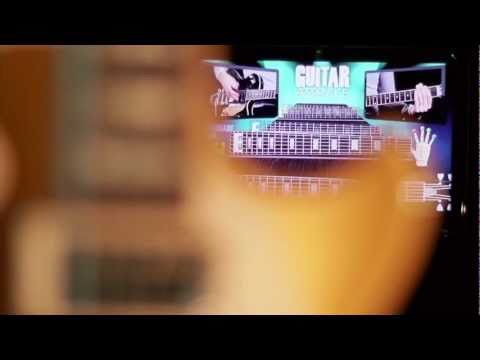
At GuitarApprentice.com, consumers may download the free trial song of the week or subscribe to the entire catalog. New songs are added weekly and already includes hits like “Boom,” “Hit Me With Your Best Shot,” “Shine,” “You Really Got Me,” “Sharp Dressed Man,” “Taking Care of Business,” “Get Back,” “Hey Jude,” “Can’t Buy Me Love,” “Independence Day,” “Please Remember Me” and “Mountain Music.” Can’t read music? The on-screen display is easy to decipher regardless of your knowledge of sheet music.
While video games like Guitar Hero and Rock Band can be fun, the reality is that these simple music interactive games cannot captivate the “real thing” and toy plastic guitars will never allow you to reach your dream of being a rockstar. Meanwhile, Guitar Apprentice has that potential. The younger generations obviously enjoy games like Guitar Hero so why not transform that into an experience where you learn in a similar environment with an actual guitar?
We think it’s a genius concept and if you are looking for a refreshing way to learn guitar (while playing some of the biggest hits in the industry) you need to check out Guitar Apprentice. Get all the information at GuitarApprentice.com.
Posted in Courses, Guitar, Learn Guitar Online, Videos | No Comments »
Sunday, August 28th, 2011

Practice, Practice, Practice.
We all know that nobody is born perfect. Sure, some people are blessed with natural talent, but the only way the best guitarists in the world reached that status is because they practiced their a** off. The good news is that if you love music, and you love playing the guitar, practice is fun. However, we all need to set-up a practice plan especially on those infamous days where the last thing you feel like doing is playing guitar.
Today, GuitarLessonsCritic.com would like to present a few tips for establishing a reliable practice plan that will allow you to learn to play the guitar.
How frequently should I practice?
Every day. We all miss a day from time to time, but if you are really serious about mastering the guitar you need to play every…single…day. It may seem overwhelming at first, but you will be surprised just how quickly you can get into a good practice routine with the right practice plan. The good news is that even though we recommend trying to play guitar every single day the amount of time required is actually not that demanding.
Okay, How long should I play every day?
30 minutes.
Most veteran guitarists practice way more than that, but in as little as 30 minutes of distraction free practice you will be surprised how quickly you can pick up a guitar. Since playing an instrument is closely tied to muscle memory, practicing for an alert 30 minutes every single day will develop your muscle memory effectively. In fact, while you can easily practice for more than 30 minutes a day, practicing too much each day usually forces beginner guitarists to pick-up bad habits because the fatigue leads to a loss of focus.
Think about it: 30 minutes x 7 = 210 minutes of practice per week OR 3.5 hours
210 minutes x 4 = 840 minutes of practice per month OR 14 hours
At that rate, you are destine to play the guitar for a good 84 hours
Sounds like a lot, right?
How do I establish a practice plan?
Unlike the old days, where any expert would say you need to take up guitar lessons the guitar is much more DIY these days. However, that does not mean you have to do everything yourself. A few select individuals are driven enough to completely develop a practice plan on their own, but the reality is most of us could at least use a little direction.
While a great deal of free material is available on the web, we HIGHLY recommend you at least invest a little money into a self-taught guitar course. To save you some time, we rated the best online guitar courses.
What else do I need to know?
The guitar will take some time to learn. It truly is a wonderful instrument to play yet it takes some time to comprehend exactly what it’s capable of producing.
Similar to sports, it’s important to master the fundamentals before you progress too far. Once you lock down the fundamentals, the guitar suddenly becomes a lot more playable (and did we mention understandable?). If you can survive in the trenches for a year or two developing your fundamentals and progressing through the techniques the guitar will mold to you.
Posted in Guitar, Learn Guitar Online | No Comments »
Sunday, August 21st, 2011

Rhythm guitar is a technique and role that performs a combination of two functions:
- To provide all or part of the rhythmic pulse in conjunction with singers or other instruments
- To provide all or part of the harmony
As a result, rhythm guitar traditionally requires the guitarist to hold down a series of chords with the fretting hand while strumming rhythmically with the other hand. While everybody likes to play lead guitar, most bands need at least one rhythm guitarist (often more) and mastering rhythm guitar is easier than mastering lead guitar therefore allowing you to get into performing sooner. Also, if you want to sing and play guitar you will more than likely play rhythm guitar while singing.
In order to learn to play rhythm guitar you must understand these basic concepts:
- Power Chords
- Straight 5ths
- Drop D Tuning
- Drop C Tuning
- Palm Muting
- Traditional Barre Chords

Power Chords
Power chords, like the name implies, provide a lot of energy for modern day music. The good news about power chords (also called “fifth chords) is they are very easy to play because the structure of the chord only requires the root of the chord and the fifth interval. Power chords are usually played on the electric guitar with distortion. They are a very popular element of rock music.
Straight 5ths
Straight 5ths represent a less common, but nonetheless useful power chord in your quest to master rhythm guitar. Straight 5ths is essentially playing two strings on the same fret. As a result, the straight 5th provides the rhythm guitar with a more “deathly” sound.
Drop D Tuning
Some guitarists tune their E string down to D so that they can play power chords. Believe it or not but Drop D tuning has been used from Van Halen to Led Zeppelin and provides a deeper, darker sound. Thus, it’s very popular with metal bands.
Drop C Tuning
Even heavier than Drop D tuning, Drop C tuning is a notorious rhythm guitar technique for metalcore bands such as Killswitch Engage and As I Lay Dying. Drop C tuning requires you to not only tune the lowest string to C, but all other strings down one note as well.
Palm Muting
Palm muting is another technique used often in metal. Any song that features an endless stream of grinding, chunky rhythm notes between the chords is what you would define as palm muting. Learn more about pulling off palm muting HERE!
Traditional Barre Chords
Traditional barre chords is a type of guitar chord, where one or more fingers are used to press down multiple strings across the guitar fingerboard (like a bar pressing down the strings), enabling the guitarist to play a chord not restricted by the tones of the guitar’s open strings. Barre chords are also referred to as “moveable” chords.
Posted in Courses, Guitar, Learn Guitar Online, Videos | No Comments »
Tuesday, August 2nd, 2011

In the past, GLC has examined how the abundance of free information on the World Wide Web can transform any disciplined, self-motivated individual into the next guitar legend. Furthermore, GLC has reviewed some of the top self-taught guitar courses for further guidance. During our quest to find the best guitar courses we have also run into some other fantastic guitar websites as well as some really poorly design sites with misleading information and/or overpriced lessons.
As a result, we wanted to spend today examining a very good website — RhythmStrummer.com. In fact, we have 7 reasons why you need to check out the website.
Authentic Lessons
A lot of websites promote easy guitar lessons yet the quality is not always the same. Thanks to a well educated, diverse staff — Rhythm Strummer lessons are clear, effective, detailed and easy to understand. Most importantly, the versions of the songs they are teaching are remarkably accurate which any guitarist surfing the Web can attest — that’s not always the case.
Diverse Lesson Selection
Rhythm Strummer features acoustic guitar lessons and techniques in several different genres. Lessons are divided into two categories: Easy Guitar Lessons and Easy Guitar Techniques. Combined the two categories offer hundreds of lessons and the catalog is constantly growing!
Fair Pricing
Yes, RhythmStrummer.com does charge a monthly fee (unless you stick with the limited free lessons). An individual guitar lesson on Rhythm Strummer costs $4.99, while an Easy Guitar Technique will cost you $14.99. Of course, you can also invest in the full membership (best deal, $24.99) featuring Unlimited Viewings per Video, 30 Days of Full Access to Technique Library, 3 Song Lessons for 30 Days and Access to Song Lesson Specials.
RhythmStrummer.com also supports the arts by paying the musicians whom are featured on the website.
Learn Guitar…and Sing Along
Unlike most guitar lessons, RhythmStrummer.com also teaches viewers how to sing along while they play a song. You might not want to be the next Mick Jagger yet learning to sing and play guitar at the same time is an important asset. A lot of bands need backup singers to harmonize, etc.
Fantastic Teachers
The staff at Rhythm Strummer features professional teachers and performers, each with a unique personality. Your average lesson on YouTube traditionally fails in this department as the instructors lack spunk, do not communicate certain concepts effectively, etc. However, the instructors at RhythStrummer.com are all exceptional at what they do — teaching the guitar.
Cool Features
Rhythm Strummer offers some unique guitar lesson features like innovative Strum Patterns, Chord Charts and Chord Diagrams. Learn more about these features HERE!
Free Stuff
In addition to lessons and techniques that cost money, RhythmStrummer.com offers further value by providing a limited catalog of Easy Guitar Songs, Free Techniques and Song Promo Options.
—
Interested? Learn more about the site at RhythmStrummer.com.
Posted in Courses, Learn Guitar Online | No Comments »
Friday, April 15th, 2011

If you have ever picked up a guitar you are likely very familiar with the name Van Halen, yet may not recognize the term “guitar tapping”. Why the comparison?
Well, if you love Van Halen music you are actually more familiar with the guitar tapping technique than you might think. In fact, if it was not for the late-1970s and Eddie Van Halen the guitar world may not be quite the same today.
Van Halen is a master with fretwork and when he does pass away, the guitar solo for “Eruption” might arguably go down as his greatest contribution to rock music. The solo is worth noting here because it serves as the original groundwork for the guitar tapping technique. If you understand how that solo is pieced together then you will also understand why you can really do some unique things with guitar tapping and how it works.
First, we should let you know that the term “tapping” is definitely misleading. It’s a generic term for fretting notes with your right hand (or picking hand)* and not, like you often hear with some of the best bass players in the world, an advance technique where you actually slap the instrument.
What the guitarist is really doing is using the picking hand and its fingers to “tap” on a note with advance techniques like hammer-ons and pull-offs. You’ve probably heard of basic hammer-ons and pull-offs (if not, introduction below) but now you’re just doing them with your alternate hand.
Hammer-Ons
Hammer-ons (like pull-offs) is simply an alternative way of playing a note without re-picking to play another note on a higher part of the same string. It’s basically the old analogy of “kill two birds with one stone”.
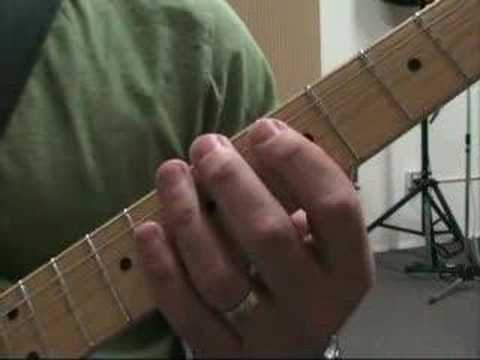
TRY THIS: First, fret the second fret on the third string with your first finger. Next, position your third finger just above the fourth fret on the third string but make sure it’s not quite touching.
Pick the string, then, without picking, place the third finger firmly on the fourth fret. If you do this with enough force the note on the fourth fret should sound. Pretty cool, right?
Like anything, this will take a few days to get down so practice, practice, practice!
Pull-Offs
Pull-offs are pretty much the complete opposite of hammer-ons. You can do pull-offs by either A) Angling your hand parallel with the neck and pulling off in a downward motion or B) Angling your hand perpendicular to the neck as if playing the piano and pulling-off in an upward motion.
First, put your third and first finger on the third string. Fret the first note with your third finger and second note with first. Play the string with a pick and then remove your third finger while performing a subtle downward tug with the same finger. Listen carefully! Did you hear the note the first finger is fretting “ring out”? If so, great.
Again, practice until you can play pull-offs without the ring stopping after you remove your finger.
Time to Experiment…
By now you should have noticed that with a little practice the number of variations with hammer-ons and pull-offs are virtually endless. Best of all, change it up with the picking hand and the possibilities become even more diverse!
As a result, you can do a ton of experimentation and I don’t know about you, but nothing is better than experimenting with your guitar. As always, understanding scales (which serve as the basis for all music knowledge) is a great place to start with multiple hammer-ons, pull-offs, etc.
*-left hand if you’re left handed
Posted in Genre, Guitar, Learn Guitar Online, Rock, Videos | No Comments »
Sunday, January 9th, 2011

So you dig country music. It’s your scene. You love the Southern twang, the heartfelt lyrics and generally depressing subject matter.
Today, our focus is on learning aspects of the guitar that are specific to country music.
Check it out…
Country Chords
Although the “current country scene” has produced a little more diverse (and much more pop) sound with artists like Lady Antebellum and Taylor Swift; in my opinion the true country sound was made famous by the older acts, legends like Hank Williams, Patsy Cline, Willie Nelson and Johnny Cash who often used a rather basic sound to let their amazing songwriting shine. Which is really what country music is all about.
In order to nail county you should get a good grasp on the basic chords. The essential guitar chords for country music include D, G, C, A and E. They obviously progress from there. The beautiful thing about country music is that it’s a perfect fit for songwriters (who also play the guitar) because it is one of the few genres still that does include a ton of unnecessary noise. It’s basic and to the point.
Country Rhythm
Get rhythm when you get the blues/
Come on, get rhythm when you get the blues/
A jumpy rhythm makes you feel so fine/
It’ll shake all the trouble from your worried mind/
Get rhythm when you get the blues/
Johnny Cash may have not been the most skilled musician of all-time but he was an incredible songwriter with that notorious deep voice. His hit “Get Rhyhtm” was all about turning to music when you “get the blues” and yes…rhythm is part of the sound that you love. Rhythm guitar will take some time to learn. My best advice is to listen to a lot of country (which you might or might not already be doing) and practice on basic rhythm patterns and strumming daily.
Country Scales
Forget country, in any preferred genre learning the scales that truly make music tick is one of the most important early lessons for an aspiring guitarist. The blues were very innovative with scales so a lot can be learned by studying such ground-breaking discoveries as the 12 Bar Blues. Learn them early!
Country Songwriting
In the end, great country music comes down to the songwriting. Country music is a great avenue for beginners because the old-school style is fairly basic but that does not mean country music is also a weak genre. It’s not. What really makes country is the songwriting! If you love to play guitar but also love songwriting then this genre is a great place for you to become the next country legend.
Country Music Resources:
Country Music — Wikipedia
TheBoot.com
CountryGuitar.com
Goodwin Music
CountryTabs.com
Posted in Chords, Country, Genre, Guitar, Learn Guitar Online | 1 Comment »
|